Announcements

Current Issue

Vol. 5 No. 1 (2026): Journal of Communication and Public Relations
					View Vol. 5 No. 1 (2026): Journal of Communication and Public Relations

Communication as a Foundation for Navigating Global Uncertainty

Communication science and public relations have evolved far beyond their traditional operational functions. Today, both scholarship and professional practice have become strategic forces that shape organizational conduct and social development. Core principles such as transparency, trust, sustainability, and inclusivity are no longer peripheral values, but central considerations in responsible decision-making. These principles are clearly reflected in the articles published in this January 2026 edition of the Journal of Communication and Public Relations (JCPR).

It is with optimism and a strong sense of responsibility that I welcome our authors, reviewers, editors, and readers at the beginning of 2026. This first issue of the year reaffirms our commitment to strengthening the roles of academics and practitioners as guardians of ethics and drivers of innovation to meet the diverse needs of the public across many fields of life.

Digital transformation, increasing global uncertainty, and rapidly changing public expectations now define the contemporary communication landscape. In such conditions, a scholarly journal such as JCPR serves as an essential space for critical reflection and for sustained dialogue between theory and practice. Through this dialogue, research findings can remain closely aligned with the realities and challenges of the professional world.

All articles presented in this issue have been carefully curated in accordance with above spirit. This edition offers a wide thematic spectrum, including strategic communication, geopolitics, crisis management, the use of digital media and artificial intelligence in business, and issues of digital security. The emerging studies in this volume address: (1) determinants of purchase decisions toward influencer-promoted organic creams among students on social media; (2) the synergistic relationship between corporate communication and crisis management practices; (3) exploring brand voice through chatbot interactions in Indonesian low-cost airlines; (4) public relations strategies in addressing cybersecurity threats in Nigeria’s digital economy; (5) mega-events and geopolitical communication as strategies of visibility and soft power; (6) the empowerment of coastal communities through AI-powered podcasting in Kepulauan Seribu; (7) a comparative analysis of public relations roles and functions in public and private organizations in Nigeria; (8) the communication strategy of Mangkunegara X in promoting the creative economy in Solo; (9) recent infringements and developments in Afghan copyright law; and (10) strategic communication approaches in the green campaign of Luxcrime x Seven Clean Seas on social media.

Taken together, these studies demonstrate how communication and public relations scholarship is capable of responding to complex issues such as health, geopolitics, digital culture, social media, and sustainability from both regional and global perspectives.

The editorial team is proud of the scholarly contributions presented in this volume, which bring together authors from diverse institutions and countries. This richness of perspective confirms that communication research can be firmly rooted in local contexts while remaining globally connected. Each manuscript has undergone a rigorous peer-review process to ensure high standards of methodological quality, originality, and contemporary relevance.

Looking forward, the Journal of Communication and Public Relations is determined to become an increasingly influential platform for national and international scholarship. We encourage future studies on artificial intelligence in communication, data-driven public relations, intercultural communication, and the role of communication in sustainable development, with the aim of building a critical and constructive scholarly community.

We hope that the articles published in this volume will stimulate reflection, inspire further research, and contribute meaningfully to the advancement of knowledge and professional practice in communication and public relations.

With warm regards,


Prof. Dr. Ulani Yunus, MM

Editor in Chief

Journal of Communication and Public Relations

Published: 2026-03-06

Articles

View All Issues

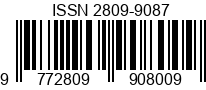
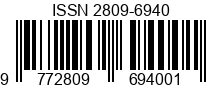
The Journal of Communication and Public Relations (JCPR) is an international, peer-reviewed journal focused on communication studies and public relations. Each edition is published with the e-ISSN: 2809-9087, p-ISSN: 2809-6940, and includes a DOI (Digital Object Identifier).

Focus and Scope
JCPR focused on the Communication Studies area. The scope of the Journal (but not limited to other issues in the area of Communication Sciences) is on the following matters:

  • Organizational Communication. The process of sending and receiving messages among interrelated individuals to achieve common goals in a particular environment or organization. 
  • Development Communication. Communication that facilitates social development through information dissemination and education, social marketing, media advocacy, social change, and community participation.
  • Reputation Management. Communication that influences, controls, or shapes people's perception of a brand, corporate, or individual
  • Government Public Relations. Strategic communication helps to communicate and interact with the governmental public.
  • Media Relations. Communication that attaches between organization or public relations professionals and media (editors, reporters, and journalists) to have a mutually beneficial relationship.
  • Corporate Communication. Communication involves a set of activities with external and internal stakeholders to create favorable conditions.
  • Marketing Communication. The use of different marketing and communication channels to deliver the messages to its desired market.
  • Public Affairs Communication. Communication that engages with the principles, systems, law, or regulatory to the public good in between corporate or government institutions with their stakeholders.

Publishing Schedule
JCPR is published biannually, in January and July.

Publication Ethics & Peer Review Process
JCPR is subject to COPE's Best Practice Guidelines for Journal Editors. For details, please access the Publication Ethics section. Every article submitted to the JCPR will go through a series of review processes. The process used is double-blind peer-reviewed. This process ensures that the author and reviewer do not know each other's identities. This is done to maintain objectivity in the ongoing review process.

  • The review process is carried out after the article goes through the initial editing process.
  • In the review process, reviewers are encouraged to pay attention to originality, objectivity, methodology, scientific impact, conclusions, and references in the article.
  • This underlies the editor to carry out the next process, accepting the article, revision, or rejection of the article.

Article manuscripts will be rejected if:

  • It is not matched with the journal scope.
  • It does not follow author guidelines and is not willing to make adjustments.
  • More than 15% of plagiarism and AI is indicated.
  • It contains topics or discussions that promote cigarettes or cigarette companies.

Open Access Policy
Journal of Communication and Public Relations supports the broadest possible open access to knowledge by opening research results published in this journal to be accessible to all and be used as much as possible. Open access policy Journal of Communication and Public Relations is supported by using the Creative Commons Attribution 4.0 International LicenseFor more details regarding the provisions and others, please access the menu on the sidebar.